
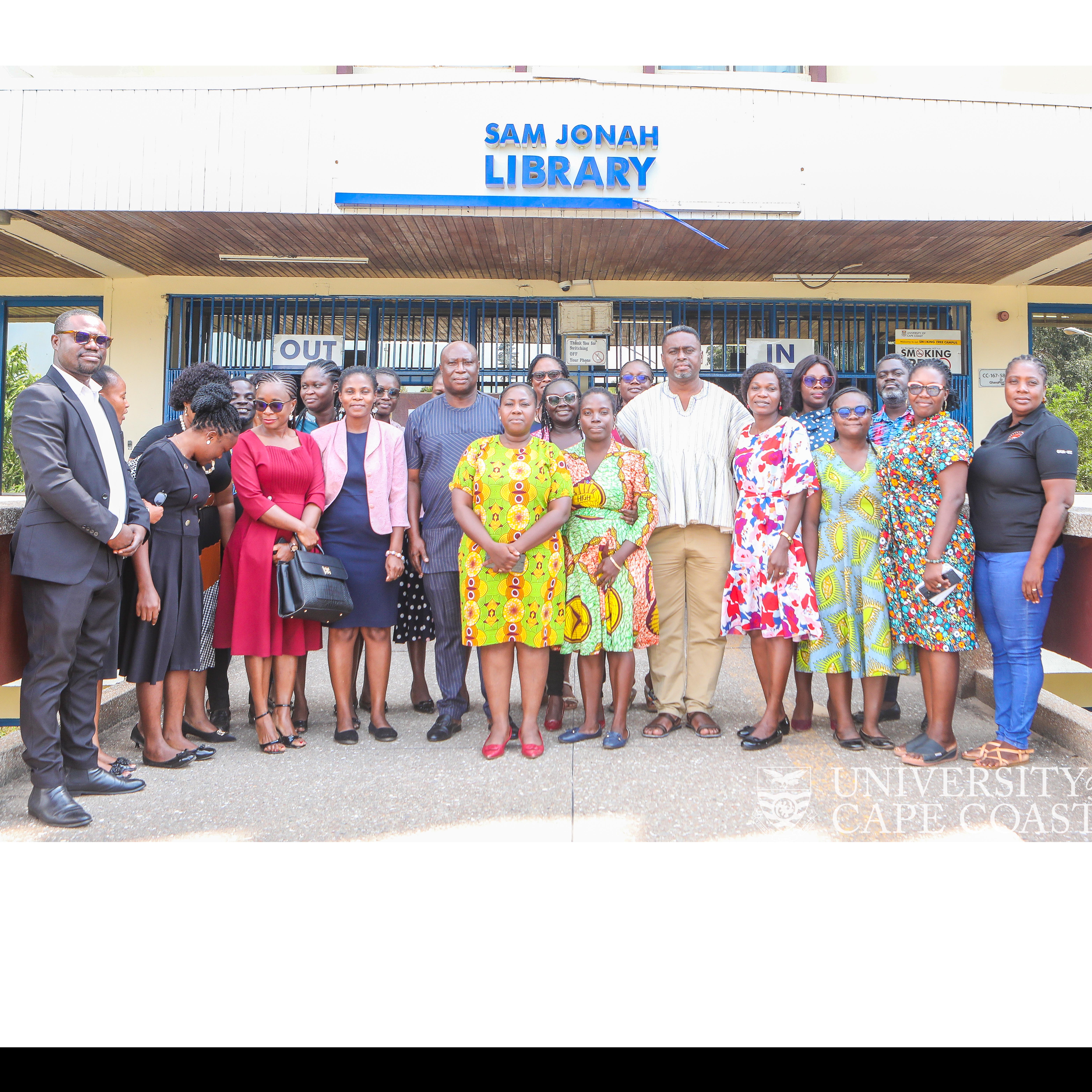
A training programme aimed at building the capacity of female lecturers to sharpen their skills and thrive in teaching, research, and leadership has ended at the University of Cape Coast (UCC).
The event was to empower participants to explore data management, open science, publication strategies, digital teaching tools, and flexible work approaches—tools essential for effective academic work.
The workshop formed part of the Ecosystem-based Management of Coastal Marine Resources in Ghana, Indonesia and Vietnam (ECOGIV) project on capacity development in higher education and research at three partner universities: Nha Trang University (NTU), IPB University, and UCC.
Funded by the Norwegian Agency for Development Cooperation (NORHED), the project was held on the theme: “Equipping Women for Impact in Teaching, Research, and Leadership.”
Participants were taken through topics such as Data Management and Open Science.
The workshop was facilitated by the Centre for Data Archiving, Management, Analysis and Advocacy (CDAMAA) at UCC, the first data-sharing and archiving centre established in Ghana to provide access to quality research data, increase knowledge discovery, and advocate for data-driven decision-making.
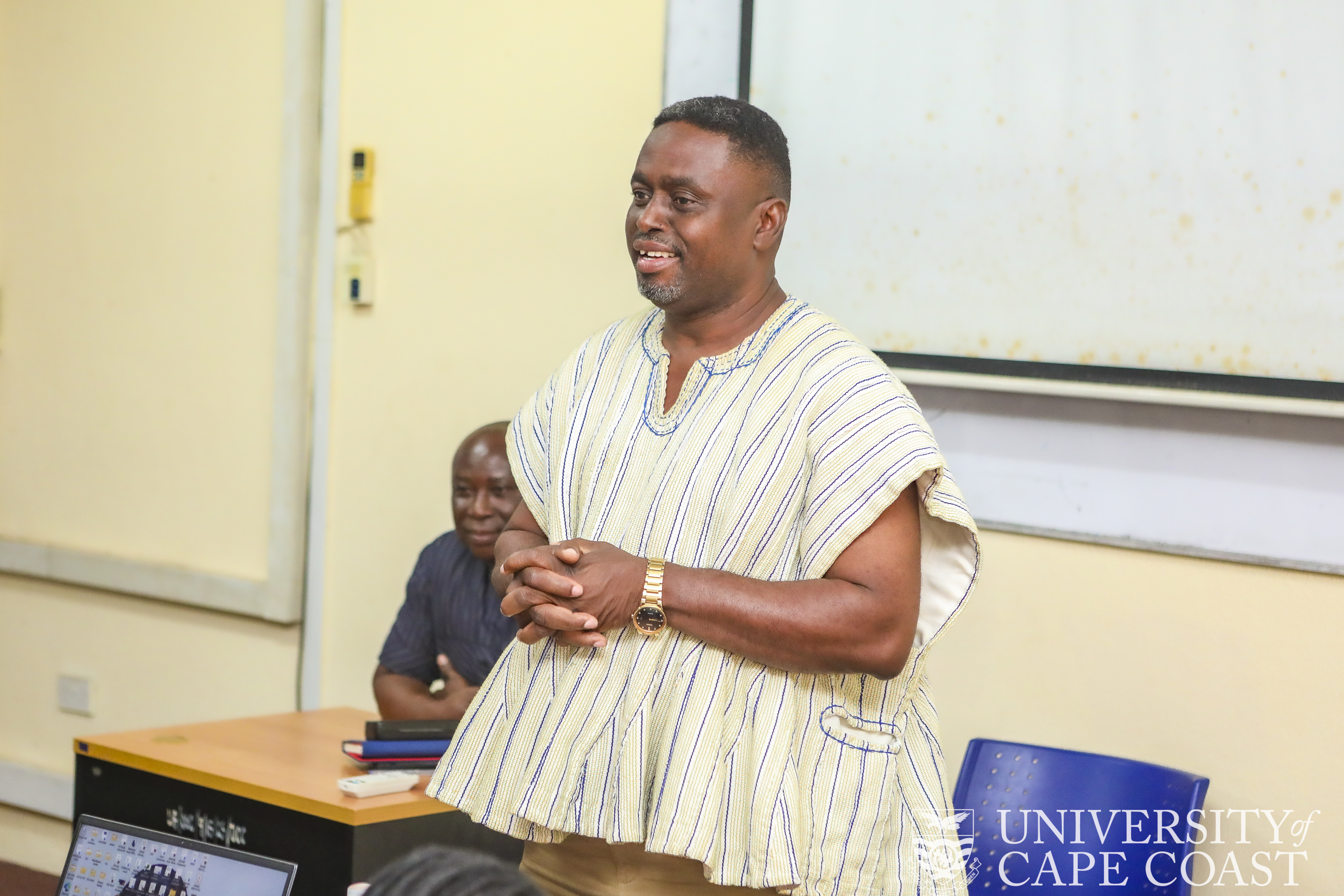
Addressing participants, the Head of the Department of Data Science and Economic Policy, Prof. Emmanuel Ekow Asmah, described the workshop as “timely and appropriate,” noting its significance in sharpening the skills of female lecturers at UCC.
He stressed the importance of accurate data and coordinated efforts to meet the university’s digitalisation agenda.
Prof. Asmah also underscored the crucial role of women in leadership, emphasising the need to amplify their voices and ensure their full participation in the digital age.
The Dean of the School of Economics, Prof. Isaac Dasmani, in his opening remarks, urged participants to embrace technology as a powerful ally in their mission.
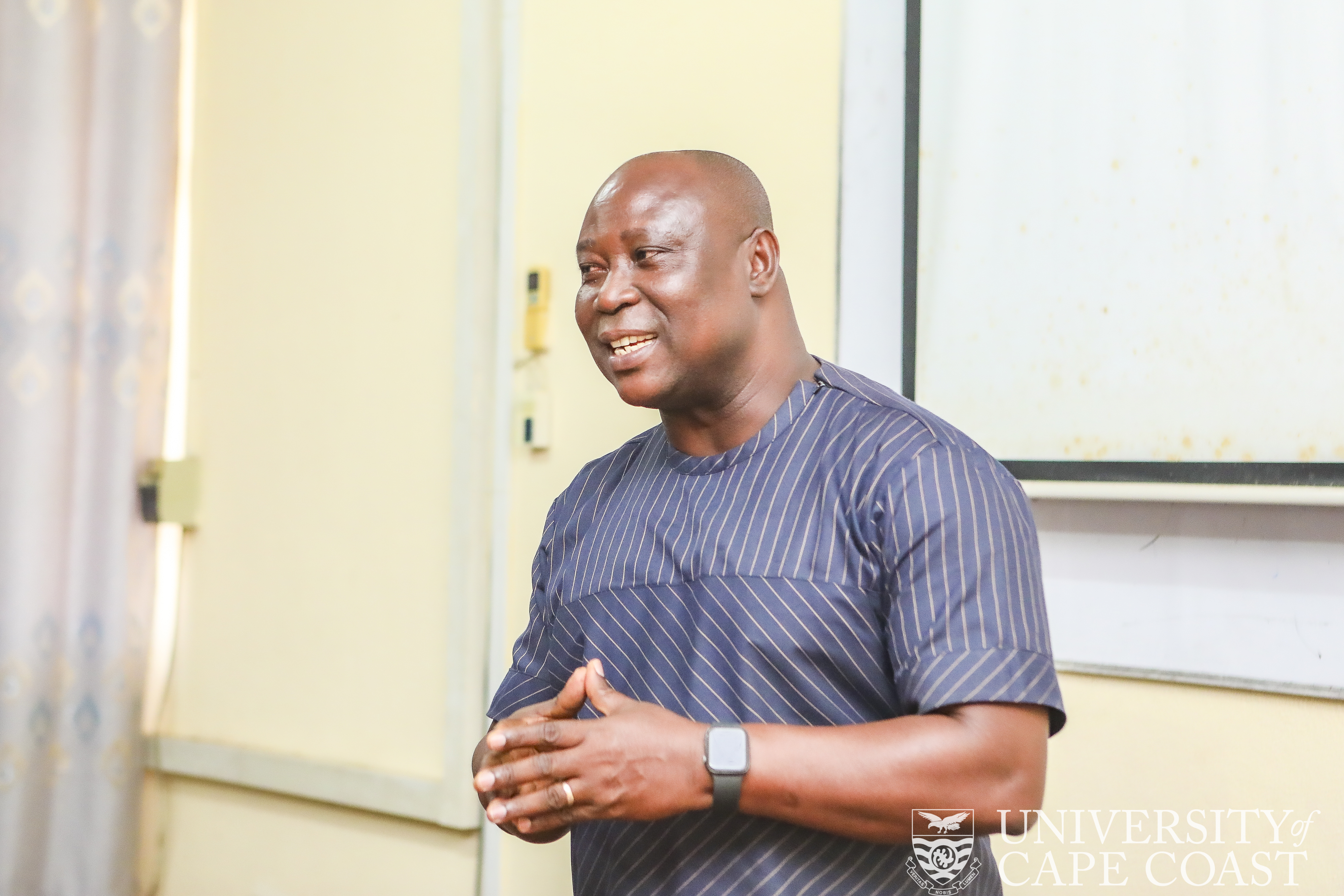
Prof. Isaac Dasmani
He advised them to use digital tools not as distractions but as aids to make lessons more engaging, adding that they should blend the wisdom of traditional pedagogy with innovations of the digital age.
The Dean encouraged participants to apply the knowledge and skills gained to enhance teaching and learning.
The facilitator, Dr. William Godfred Cantah, of CDAMAA, explained that research data include any evidence, observations, or digital objects that generate or answer research questions—such as survey responses, interview transcripts, code, images, logs, and laboratory notes.
According to him, well-managed data make research more reproducible and transparent, helping other scholars understand methods and verify findings.
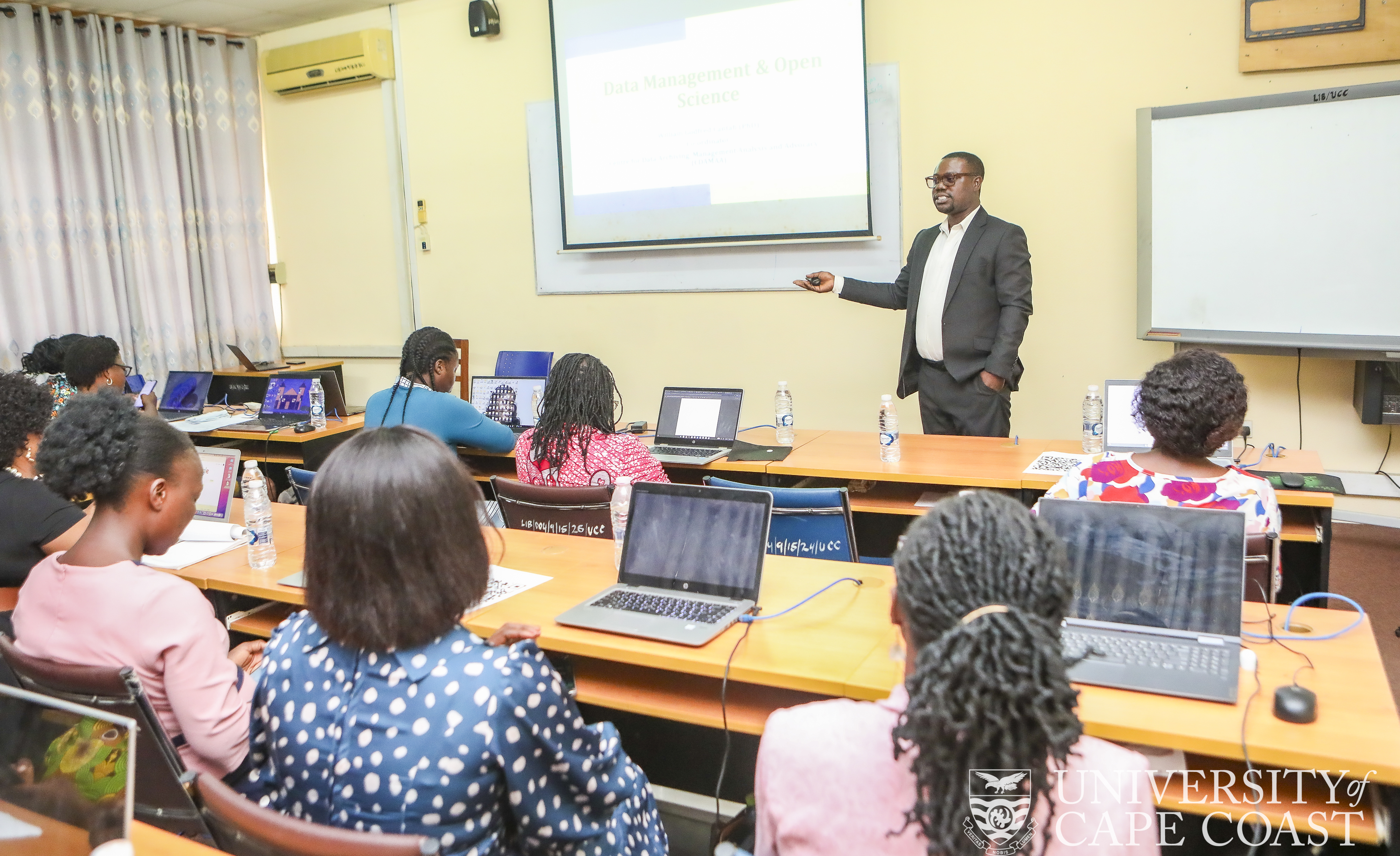
Dr. William Godfred Cantah speaking at the event
Dr. Cantah noted that funding agencies, journals, and universities now require data management plans and concrete evidence that researchers share and preserve their data.
“Adopting robust data practices is no longer optional but essential for compliance, accountability, and ethical responsibilities in research,” he added.
Dr. Cantah further urged the participants to recognise the transformative role of AI in teaching and learning.
He encouraged them to embrace the opportunities that digital technologies, including AI, present.
Dr. Cantah emphasised that AI was not a threat but rather a powerful enabler for teachers, amplifying their ability to guide, mentor, and inspire learners.
As part of the workshop, the facilitator took the participants through practical aspects of data management, open science, and Artificial intelligence.
Some participants told reporters that the programme would go a long way toward sharpening their digital skills.
They urged CDAMAA to organise more of such programmes to help lecturers develop the skills needed for their work.